
Show types
Indoor Pyro vs. Aerial Fireworks: Choosing a Show
By Garden State FireworksPublished
When people plan a celebration with fireworks, they often picture shells bursting high above a field. That is one kind of show, and a wonderful one. But there is a second family of effects that works up close, on a stage, in an arena or inside a building. Choosing between them, or combining them, depends mostly on where your event takes place and how near your audience will be.
What aerial fireworks are
Aerial fireworks are the shells and rockets most people think of. They are launched from a safe distance and burst high overhead, so they need open sky, a clear launch area and a wide viewing audience. They suit outdoor venues such as fields, waterfronts, parks and large parking areas, and they fill the sky for everyone in range.
Because the effect happens far above the crowd, aerial shows can be seen from a long way off. That makes them a natural fit for July 4th events, festivals, town celebrations and large outdoor receptions.
What indoor and close-proximity effects are
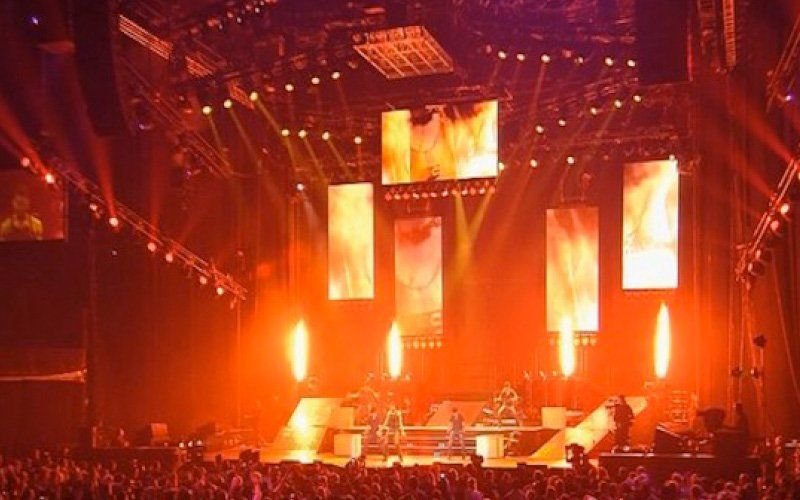
Indoor and close-proximity pyrotechnics are designed to be used near people, often within a few steps of the stage or the audience. Our Special FX team provides close-proximity pyro, flame and fog effects, confetti and more for sporting events, weddings and stadium tours. Our sister company, Garden State Pyro, manufactures custom close-proximity and indoor pyrotechnic effects for concerts, arenas, film and private events.
Common examples include fountain-style sparks along a stage, jets of flame, columns of vapor from CO2, and bursts of confetti. These effects are about punctuating a moment, such as an entrance, a song, a goal or a reveal, rather than lighting the whole sky.
Decide by venue
The venue is the biggest factor. Here is a simple way to think about it.
Indoor venues
Arenas, ballrooms, theaters and other enclosed spaces call for indoor effects. Aerial shells are not an option under a ceiling, but a carefully designed set of close-proximity effects can be dramatic and fully timed to music or lighting. Ceiling height, ventilation and surrounding materials all matter, and the venue will usually have its own requirements. Placeholder. TODO: confirm with client (venue approvals needed for indoor pyro)
Stages and stadiums
For concerts, sports and tours, effects on or around the stage and field give the crowd a close, powerful moment. A stadium event can also combine them with an aerial finale if the open sky is available and permitted.
Open fields and waterfronts
If you have open space and a wide audience, aerial fireworks usually deliver the most impact for the most people. Close-proximity effects can still add detail at ground level, especially for a ceremony or a staged entrance.
Think about audience distance
How far will your guests be from the action? A large audience far from the launch area suits aerial fireworks, which are designed to be seen from a distance. A smaller audience seated or standing close to a stage suits close-proximity effects, which are designed to be seen up close and to feel immediate.
If your audience is mixed, with some guests near and some far, a combination can work well. Talk through the layout with your show designer so each group gets a good view.
Consider venue rules
Every venue has its own rules about pyrotechnics, and local officials may have their own. Some venues welcome fireworks, some allow only certain effects, and some limit them to specific times or areas. The same venue may treat indoor effects and outdoor shows very differently.
We recommend raising the idea with the venue as early as possible, and asking what they need from the fireworks company. Specifics vary, so treat any detail you hear as something to confirm in writing. Placeholder. TODO: confirm with client (which approvals and paperwork the company handles for indoor shows)
Combining both
Some of the best events use both. An outdoor wedding might feature flame and spark effects at the entrance and an aerial finale at the end of the night. A corporate celebration might open with indoor effects on stage and close with a rooftop display. Garden State Pyro works in conjunction with its parent company, Garden State Fireworks, to present outdoor shows that include close-proximity effects for a more intense display.
If you are weighing the two, ask your designer to show how each option would look and feel at your venue, and how they could work together.
Questions to ask your venue
- Are pyrotechnic effects allowed here, and are indoor and outdoor effects treated differently?
- Where would effects be placed, and how far would the audience be?
- What are the ceiling height, ventilation and fire-safety requirements?
- Who is our contact for approvals, and what do they need from us?
- Are there timing or noise limits we should know about?
- Is there a backup plan if conditions change?
Related reading
Special effects
Planning indoor or stage effects?
Tell us about your venue and event. Our short planning form takes about two minutes.